
Industrial mixing requirements span a remarkable range of applications, from blending two chemical streams in a treatment process to dispersing gas into liquid, homogenising temperature gradients in a pipeline, or ensuring thorough contact between reagents in a chemical reaction. What many of these applications share is a need for reliable, consistent mixing without the maintenance burden, power consumption, and capital cost of mechanical agitation equipment. The Pipeline Static Mixer meets this need across a wide range of industrial applications, and understanding why it works so well helps clarify when it should be the preferred specification.
How a Static Mixer Works Without Moving Parts
The inline static mixer achieves its mixing action by using the energy already present in the flowing fluid. A series of fixed geometric elements, typically helical or corrugated inserts, are mounted within a tubular housing and installed directly into the process pipeline.
As fluid flows through the mixer, these elements cause the stream to divide, rotate, and recombine repeatedly. Each element introduces radial mixing across the pipe cross-section, overcoming the natural tendency of laminar or even moderately turbulent flow to maintain distinct concentration and temperature gradients across the stream diameter.
The result is a thoroughly mixed, homogeneous fluid exiting the downstream end of the mixer, achieved entirely using the pressure energy of the flow without any external power input or mechanical components.
Why the Absence of Moving Parts Matters in Industrial Applications
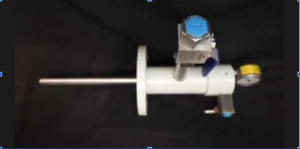
Chemical injection quills deliver chemicals into a process stream at a single point, but without subsequent mixing, the chemical may remain concentrated in a narrow band rather than dispersing uniformly across the full pipe cross-section. Placing a static mixer downstream of the injection point resolves this problem completely, ensuring uniform chemical distribution before the fluid reaches downstream process equipment.
| Application | Benefit of Static Mixing |
| Corrosion inhibitor injection | Uniform distribution prevents localised under-dosing |
| Scale inhibitor blending | Ensures consistent protection across the full flow stream |
| pH adjustment chemical dosing | Prevents pH gradients that damage downstream equipment |
| Gas-liquid dispersion | Creates fine, uniform bubble distribution |
| Two-component blending | Achieves thorough mixing without tank agitation |

Where Inline Static Mixers Are Most Commonly Used
Chemical Dosing Applications
The pairing of chemical injection quills with a downstream static mixer is one of the most common configurations in process and oil and gas applications. Injection quills introduce the chemical at the pipe centerline, and the static mixer distributes it uniformly before the downstream process.
Water Treatment Plants
Municipal and industrial water treatment plants use static mixers extensively for chlorination, coagulant dosing, pH adjustment, and fluoridation. The ability to achieve rapid, thorough mixing within the pipeline itself eliminates the need for separate mixing chambers in many designs.
Heating and Cooling Applications
Temperature gradients develop in pipelines where heating or cooling is applied at the pipe wall. A static mixer redistributes these gradients across the flow cross-section, improving heat transfer efficiency and reducing the temperature difference between the pipe wall and the bulk fluid.
Selecting the Right Static Mixer Configuration
Several variables determine the correct static mixer specification for a given application:
- Number of mixing elements — more elements provide more thorough mixing but also higher pressure drop; the number required depends on the mixing duty
- Element geometry — helical elements suit most liquid-liquid mixing; corrugated plate designs are preferred for gas-liquid dispersion
- Mixer diameter — typically matched to the downstream pipe diameter, though some applications use a reduced bore mixer to concentrate mixing energy
- Material selection — must be compatible with both the process fluid and any chemicals being mixed; stainless steel, Hastelloy, and PTFE-lined options are common
The key performance parameter is the coefficient of variation (CoV) — a measure of the uniformity of mixing at the mixer outlet. Most process applications require a CoV below 0.05, meaning the concentration variation across the pipe cross-section is less than 5%.
Pressure Drop Considerations
Every Static Mixer introduces a pressure drop proportional to the flow velocity and the number of mixing elements. This pressure drop must be accounted for in the system hydraulic design to ensure that upstream pumping equipment can maintain the required flow rate.
For well-designed static mixers in typical industrial piping, the pressure drop is modest and represents a reasonable trade-off for the mixing performance achieved. High-efficiency element designs minimise pressure drop while maintaining good mixing performance, and these should be preferred in applications where pumping energy costs are significant.
Maintenance Advantages Over Dynamic Mixing Equipment
Compared with mechanically agitated mixing vessels, tank mixers, or inline impeller mixers, the inline static mixer offers compelling maintenance advantages:
- No mechanical seals that wear and require replacement
- No bearings subject to lubrication and fatigue
- No drive systems requiring electrical supply, gearboxes, or belt drives
- Cleaning typically possible in-line by flushing, without disassembly
For remote or unmanned installations, these maintenance advantages translate directly into improved reliability and reduced operational cost.
Conclusion
The static mixer achieves thorough, consistent mixing using only the energy present in the flowing stream, without mechanical components that add complexity, maintenance cost, and potential failure modes. Its combination of reliable performance, low maintenance, and compatibility with virtually any process fluid makes it one of the most valuable and widely applicable devices in the process engineer’s toolkit. NND Oil & Gas supplies static mixers for oil and gas, water treatment, and general process industry applications, with engineering support to ensure correct selection and configuration for every mixing duty.